


How Wick-Based Self-Watering Pots Work for Aroids
TL;DR
A wick-based self-watering pot connects a water reservoir to the growing medium. Water moves through the wick by capillary action, helping maintain access to moisture between refills.
The wick does not measure the plant's needs. The medium, water level, pot design and growing conditions determine how wet the root zone becomes. Self-watering can simplify care, but overwatering and root problems remain possible.
Step by step
1. Understand what the wick does
Small spaces within a wettable wick allow water to move along it, including upward against gravity. The growing medium then receives moisture where it contacts the wick.
This is a passive connection, not a sensor or pump. The amount and distribution of moisture depend on the complete arrangement, rather than the plant sending a precise request for water.
2. Choose a suitable growing medium
The spaces between and within the particles affect how water is held and how much room remains for air. Medium composition and compaction matter, as does the container.
A coarse mineral mix, fine propagation mix and dense potting mix will not behave identically with the same wick. There is no automatic 50/50 water-to-air balance created by fitting a reservoir underneath them.
Use a medium suited to your plant and system, then check the result after watering. A dry surface can conceal a much wetter lower section.
3. Install the wick and respect the reservoir level
Follow the pot's setup instructions so the wick makes contact with both the reservoir and growing medium. Check that it has not slipped out of position during planting.
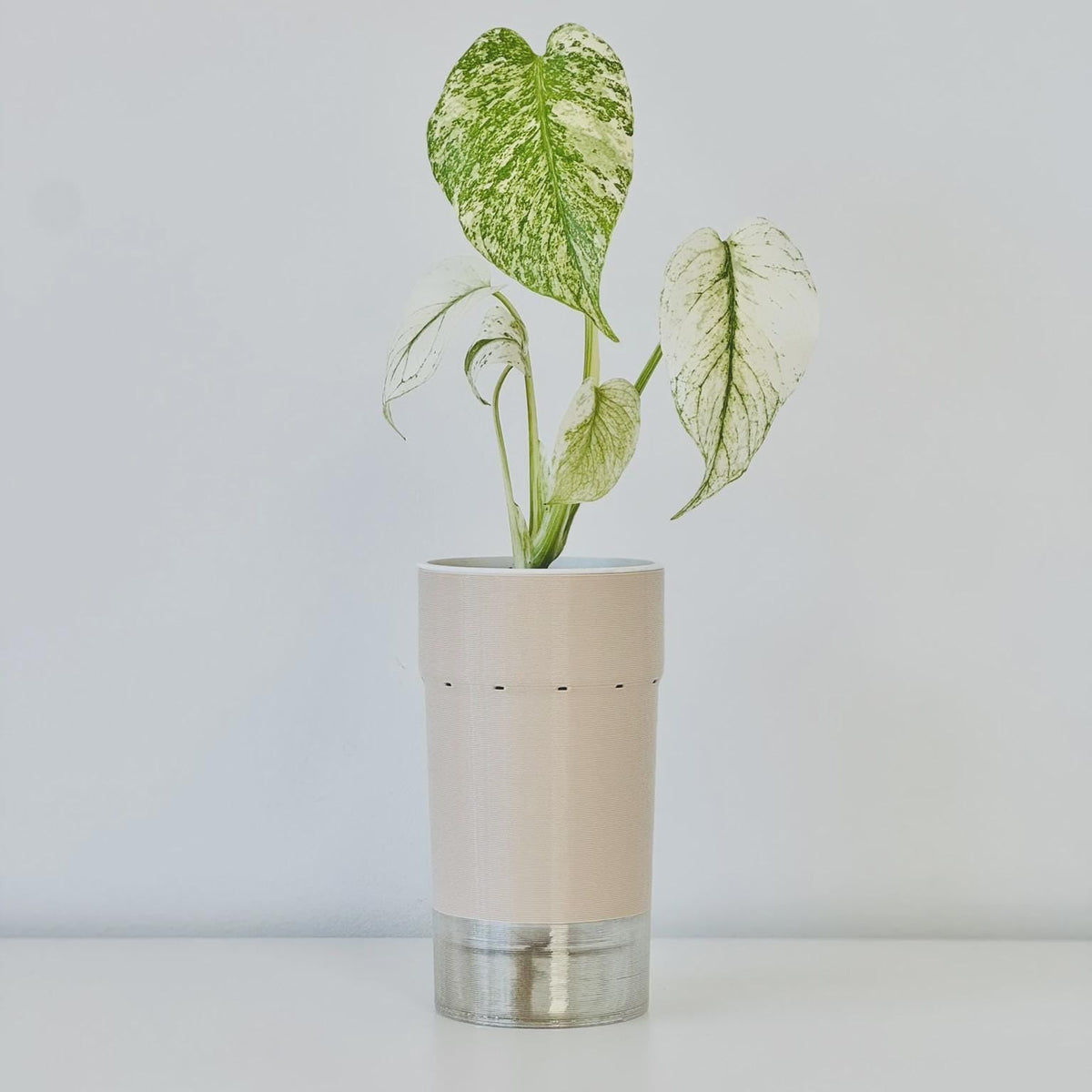
Variegata Nordica pots use a cotton wick. Cotton is a practical material for this purpose, but it should be inspected and replaced when its condition or performance deteriorates.
For the signature pot, water from above and stop before the water reaches the coloured section. Do not assume that filling higher will improve the setup.
4. Check the plant after the change
A newly transferred plant needs observation while you learn how the medium and reservoir behave together. Look at the roots, moisture and growth rather than assuming the system has become maintenance-free.
If the plant wilts, first check whether the medium is too dry, too wet or poorly connected to the wick. Automatically filling the reservoir can be the wrong response when the root zone is already saturated.
5. Keep water and air in perspective
Roots need access to oxygen, but side vents alone do not determine the conditions throughout the pot. A heavily compacted or persistently saturated medium can still create problems in a ventilated inner pot.
Roots may eventually grow into a reservoir. That does not make them immune to disease or unsuitable water conditions. Keep checking root texture, growth and reservoir cleanliness.
6. Refill according to what you observe
Light, temperature, plant size and the medium affect water use. There is no single refill interval for every pot.
An empty reservoir does not necessarily mean the entire medium is already dry. Equally, do not assume it will safely hold enough moisture for a fixed number of extra days. Check before extending the refill interval.
7. Maintain the removable parts
Lift out the inner pot when appropriate to inspect roots and clean the cover or reservoir. Remove accumulated debris and keep the wick working as intended.
When using fertiliser, follow a suitable feeding programme rather than treating every top-up as an instruction to add the same amount of nutrients.
Explore self-watering pots in different shapes, colours and sizes and choose a setup that fits your plant and your watering routine.
FAQ
Can a wick-based pot overwater a plant?
Yes. The medium can remain too wet for the plant, especially if the setup or water level is unsuitable. A wick does not make saturation impossible.
Is cotton worse than synthetic string?
Different wick materials have different characteristics. What matters is that the wick wets reliably, makes the required contact and remains in suitable condition. No material makes the whole system maintenance-free.
Can I use a self-watering pot with soil?
A suitable potting mix may work. Check its moisture retention and the pot's instructions instead of assuming that every soil mix works equally well.
Do vents guarantee more oxygen at every root?
No. Vents provide openings, while the medium and its moisture determine how air can move within the root zone.
Is this suitable for every houseplant?
Choose according to the plant's requirements. Plants that prefer substantial drying between waterings may need a different arrangement from plants that suit more consistent moisture.
Sources
- University of Minnesota: African violets. Describes wick watering; its plant-specific care routine is not an aroid prescription.
- Purdue University: Understanding the Pores of a Soilless Substrate. Explains capillary water retention and the spaces available for air and water.
- Purdue University: Evaluating Container Substrates and Their Components. Explains how medium and container properties influence growing conditions.
The product setup notes describe Variegata Nordica pots. The scientific sources explain the underlying principles, not comparative tests of these pots against other brands.
Comments