


Japandi Plant Pots: Choose a Calm Display That Is Easy to Care For
TL;DR
Keep the palette simple, vary shape or height for interest and make every pot easy to inspect and water. Choose growing space around the roots, then use colour and placement to bring the display together. A lovely planter is much more useful when you can reach its reservoir.
Choose one palette
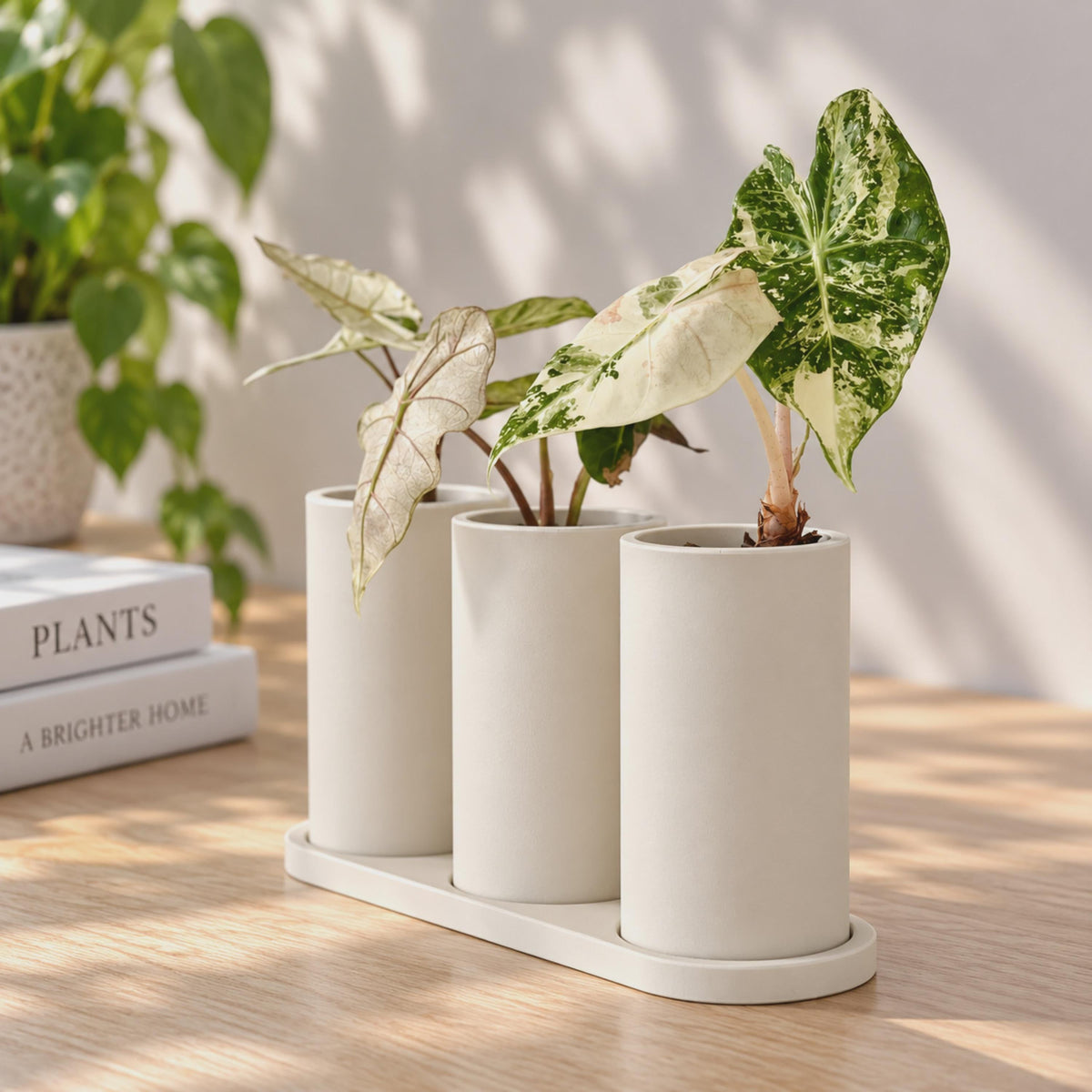
Japandi-inspired interiors often combine uncluttered forms, warm natural textures and a restrained palette. You do not need to replace the whole collection to create that feeling.
Start with the surface already in the room: pale wood, dark shelving, a stone-effect counter or painted wall. Choose one main planter colour and, if you want variety, one supporting colour.
- White and beige: a gentle starting pair beside pale wood and green foliage.
- Black and dark green: a stronger silhouette against a light wall.
- Terracotta with beige: warmth without making every pot compete.
These are styling suggestions, not rules. If baby pink makes you happy, it can belong in the room. The plants have not established a design committee.
Vary shape, not everything
Choose one main visual rhythm: repeated colours with different shapes, or one shape repeated in different sizes. Changing colour, shape, finish and height on every pot can make a small shelf feel busier.
Place the largest plant first, then leave room for its foliage. Group smaller plants where they remain visible and reachable. Avoid lining all pots along the shelf edge if leaves would then crowd the wall or block access.
Trying to make a tiny plant look substantial? Raise it on a stable display or group it with another small plant instead of immediately giving its roots a much larger volume.
Fit the roots first
Check the usable insert width and depth. If choosing a cover pot for a conventional nursery pot, make sure the nursery pot can lift out and that drainage remains accessible.
A broad decorative body does not have to mean a broad root zone. Choose the growing container separately when the design permits, and avoid packing extra medium around an already suitable nursery pot merely to fill the outer shape.
For self-watering sizes, use the pot-size guide before selecting the colour. It is much easier to compare options with a root-ball measurement in hand.
Choose useful visibility
A semi-clear reservoir can make checks convenient. An opaque planter can create a more uniform appearance, but you still need an accessible way to check its water and inner pot.
My signature self-watering pot combines a removable growing insert with a visible reservoir. [2] Browse the wider pot collection if another shape, colour or size suits the room better.
- At a desk: leave space to lift the insert without knocking over a lamp.
- On a high shelf: make the whole pot safely removable for inspection.
- In a cabinet: keep the waterline visible from the front where practical.
- Beside textiles: plan a protected surface for watering and drips.
Can you check it without moving six other things? If not, simplify the arrangement before buying another matching planter.
Keep care comfortable
Group pots by appearance if you like, but check their watering individually. Light, temperature, growing medium and plant size affect water use. [1] A matching row can contain pots that need attention on different days.
Protect the furniture beneath the display. For conventional pots, empty runoff after watering rather than leaving it hidden inside a decorative cover. For a purpose-built reservoir pot, follow its intended fill level.
Wipe dust and spills before they build up. Wash removable parts using the product's care guidance and gentle materials. Keep labels or a simple plant list if several small specimens look alike.
Common myths
- “A Japandi display must use beige everywhere.” A coherent palette and uncluttered arrangement matter more than copying one colour.
- “Matching pots should share a watering schedule.” Check the plant and growing setup inside each one.
- “The planter should match the leaf size.” Let roots determine the growing insert; use grouping and placement to balance the display.
FAQ
Can I mix different pot shapes?
Yes. Repeating a colour or finish can make different shapes feel related. Leave enough space for foliage and hands so the display remains practical.
Are opaque pots harder to maintain?
They hide the waterline, so choose an arrangement you can inspect conveniently. A removable insert or another clear checking method makes the routine easier.
Do I need to replace pots that work?
No. Start with rearrangement, fewer competing accessories or a small number of compatible covers. Keep healthy growing setups intact where practical.
Ask a question
What shelf colour, available space and plant sizes are you styling? Tell us whether you prefer visible reservoirs or an opaque finish, and which part of maintenance currently feels awkward.
 What Size Self-Watering Pot Does Your Plant Need?
 PON, Perlite or LECA: Choosing a Semi-Hydro Medium
Comments