


How to Do the Puddle Method for Alocasia Corms
TL;DR
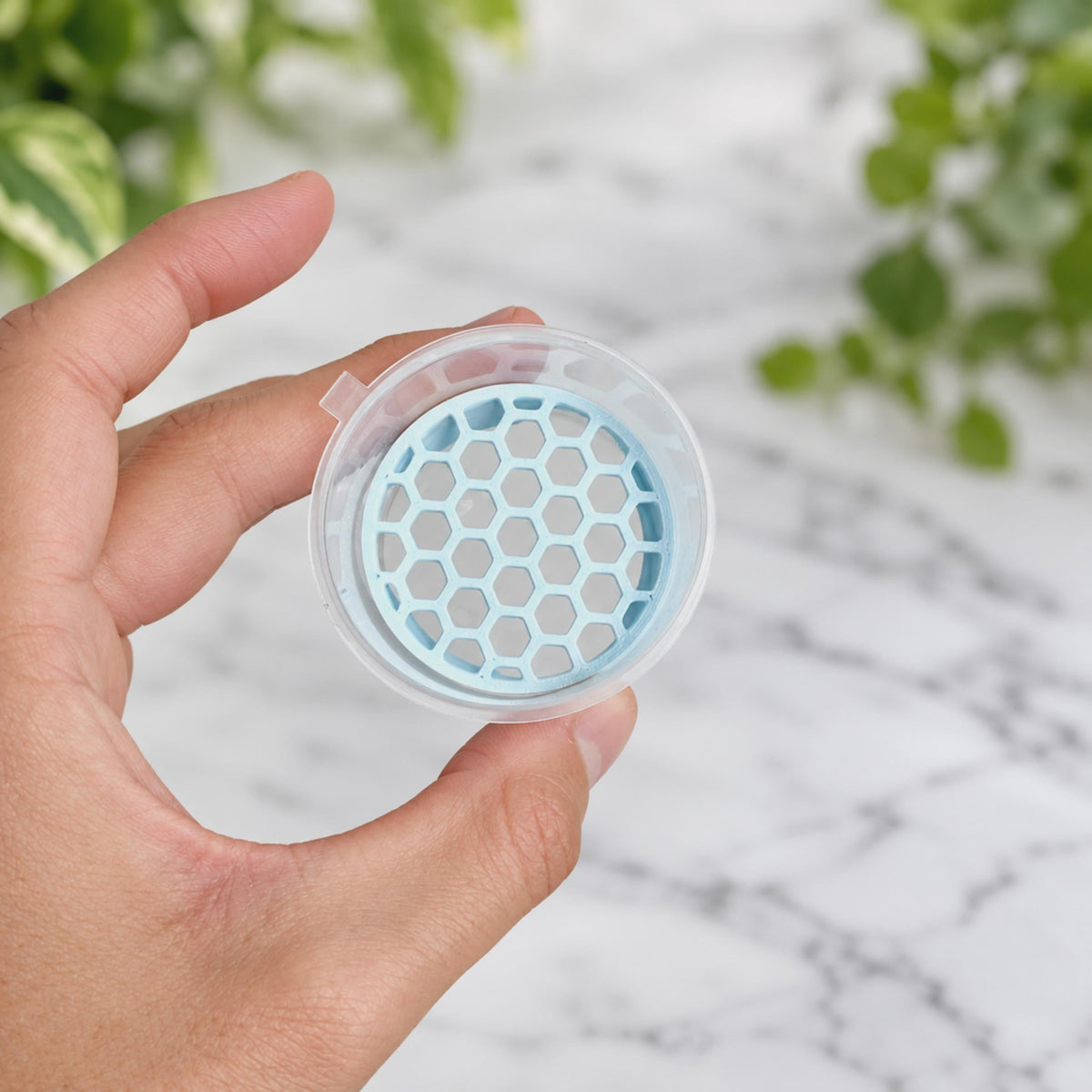
The puddle method: your corm sits on a riser, just above a little water. The corm stays dry, and its roots grow down into the water.
- Days to weeks until the first roots
- Under the riser water never touches the corm
- Every 1 to 2 weeks change the water
- 2 to 3 leaves or a cup full of roots: time to pot
What you need
- A firm Alocasia corm
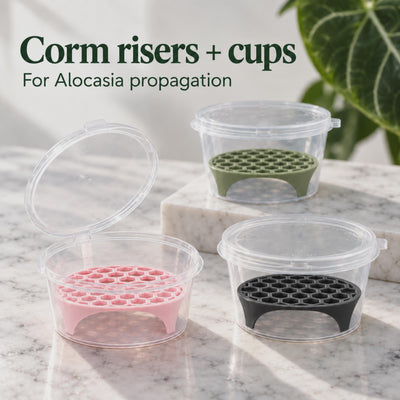
- A corm riser with its clear cup and lid
- Water
- A warm spot, 22 to 26 °C
Step by step
- Rinse the corm. Wash off any soil. It should feel hard, like a little potato.
- Lay it on the riser. On its side is fine. Roots and leaves find their own way.
- Add water. Fill up to just under the riser. The corm must stay dry.
- Close the lid. The damp air inside wakes the corm up.
- Keep it warm. 22 to 26 °C is best. It doesn’t need light until the first leaf.
- Change the water every 1 to 2 weeks. Fresh water also brings fresh air for the roots.
Why it works
A corm that sits in water can rot. Roots, on the other hand, love water. The riser keeps the corm dry and lets the roots grow down into the water when they are ready.
I used to plant corms straight into a pot. Many took months, and some rotted. With the puddle method, most of mine root in days to a few weeks.
What do you see?
Tap what you see in the cup:
A white root
Great, the corm is awake. Leave it alone. The root will find the water by itself.
Roots in the water
Perfect. White roots are healthy. Keep changing the water every 1 to 2 weeks.
A green shoot
The first leaf is coming. Keep the lid on, and give it bright light without direct sun.
Nothing yet
If the corm is still hard, it’s alive. Check that it’s warm enough, then be patient.
Fuzz or a soft spot
Fuzz on old skin is usually harmless: wipe it off. A soft or smelly spot is rot: see the corm troubleshooting guide.
When to put it in a pot
Wait until roots fill the cup, or the plant has 2 to 3 good leaves. Young roots and leaves are fragile. Moving them too early is the riskiest moment.
Pot it in what you like: perlite, moss, LECA, PON or a chunky soil mix. I use PON, but many growers use perlite with great results.
Keep the air damp for the first weeks after potting. A humidity cup makes this easy. Next step: the first month after sprouting.
Starting lots of corms?
Square risers line up side by side on a shelf: see rooting many corms at once.
FAQ
Should the corm touch the water?
No. Only the roots go in the water. The corm stays just above it.
Why does the water go down?
The roots drink it. That’s a good sign. Top it up to the same level.
Can I use tap water?
Yes, at room temperature. If your water is very hard, rinse the cup when you change the water.
Do I need fertiliser?
No. The corm has its own food stored inside until its leaves take over.
 The Puddle Method for Alocasia Corms: Rooting Without Rot
 The Complete Guide to Acclimating Tissue-Culture
 Using a Tissue-Culture Pot: Setup, Moisture and Dome Ventilation
Comments